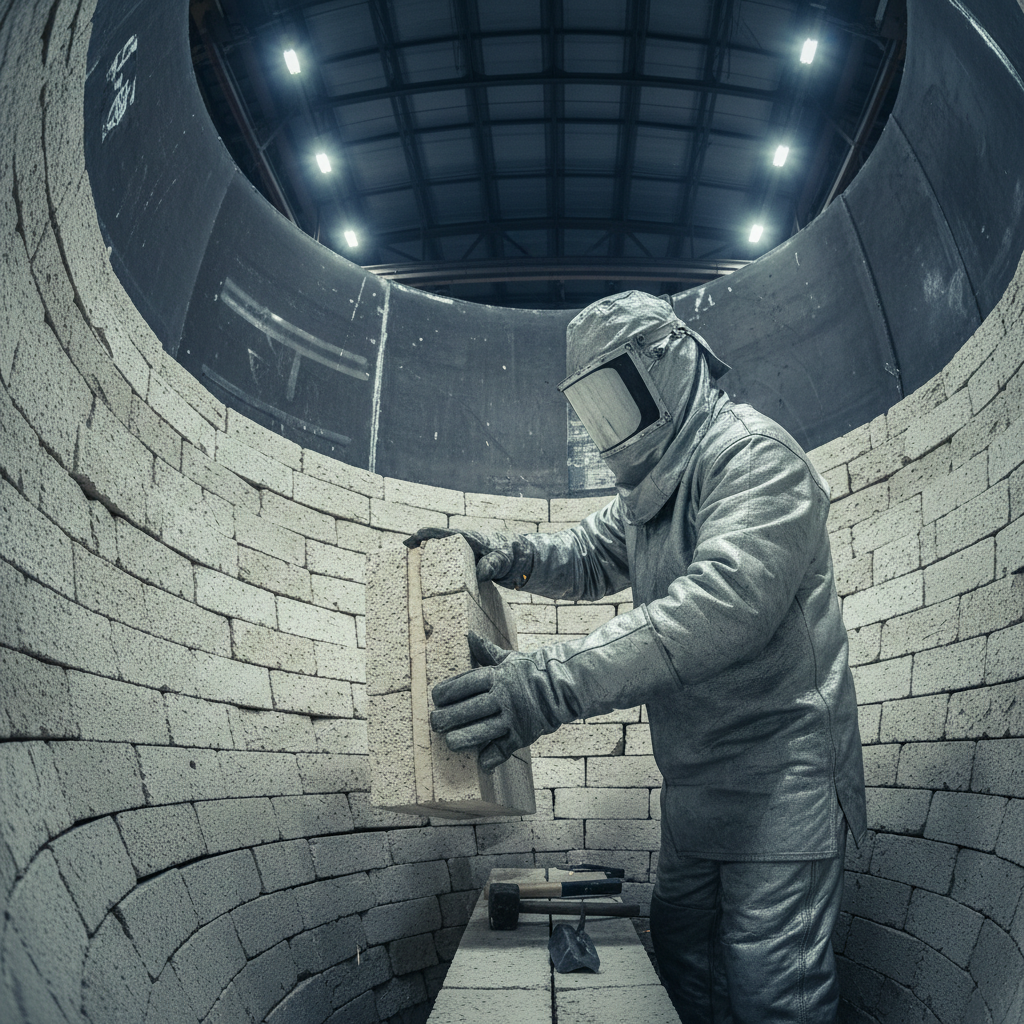
The last material standing
at 1,700°C.
Al₂O₃-ZrO₂-SiO₂ composite linings engineered for BOF, EAF, AOD, and RH degasser service. When the furnace demands certainty, the lining is the only answer.
Al₂O₃-ZrO₂-SiO₂ composite linings show 34% longer campaign life in BOF service.
The performance advantage originates at the microstructural level. Zirconia particles distributed through an alumina matrix create a crack-deflection network that absorbs thermal shock energy without propagating to the working face — the mechanism that conventional high-alumina bricks cannot replicate.
Note: Lower thermal conductivity at working temperatures reduces heat flux through the shell, extending lining service life and reducing energy loss per heat cycle.
Third-party testing at ISO 10081 conditions confirms performance across six critical parameters.
All data generated by independent accredited laboratories — Ceramics Research Centre (Sheffield) and Institut für Feuerfesttechnik (Aachen). Test methodology per DIN EN ISO 10081-3. Competitor samples sourced from open market.
| Test Property | Kiln AZS-75 | Competitor A | Competitor B | Industry Min. |
|---|---|---|---|---|
| Cold Crushing Strength (MPa) | 128 | 94 | 87 | ≥ 80 |
| Thermal Shock Resistance (cycles) | 34 | 22 | 19 | ≥ 15 |
| Apparent Porosity (%) | 13.2 | 17.8 | 19.4 | ≤ 18 |
| Bulk Density (g/cm³) | 3.42 | 3.18 | 3.09 | ≥ 3.0 |
| Slag Erosion Rate (mm/hr at 1,650°C) | 0.38 | 0.61 | 0.74 | ≤ 0.60 |
| Permanent Linear Change after 1,500°C (%) | +0.1 | +0.4 | +0.6 | ±0.5 |
Source: CRC/IfF Independent Report No. KLN-2024-087 · Test date: Q3 2024 · All values mean of n=5 specimens
Validated across four primary furnace types in active steelmaking service.
Performance data compiled from 23 plant installations over 36 months of monitored service. All campaign life figures represent mean values; individual plant results vary with operating practice.
Converter vessel lining, taphole sleeves, purging plugs
Oxygen steelmaking generates intense slag/metal interface erosion and thermal cycling. AZS-75 zirconia toughening mechanism absorbs the differential thermal expansion stress that fractures conventional linings at the working face after 800–900 heats.
| Metric | Kiln AZS-75 | Baseline |
|---|---|---|
| Campaign Life (heats) | 1,420 | 1,060 |
| Wear Rate (mm/heat) | 0.041 | 0.055 |
| Slag Line Life Extension | +31% | — |
Field-documented results from active plant installations.
Each case study includes full wear analysis methodology, post-campaign SEM micrographs, and cost-per-tonne calculations. Written for plant engineers, reviewed by plant engineers.
Extending BOF Campaign Life from 1,060 to 1,420 Heats at Lakshmi Steel, Visakhapatnam
Plant maintenance team documents systematic wear analysis, lining design revision, and installation protocol changes that delivered 360 additional heats before scheduled relining.
Reducing Unplanned EAF Stops from 2.1 to 0.8 per Year at Keystone Metals, Pennsylvania
Detailed post-mortem analysis of hot-spot erosion patterns guides targeted material upgrade at EBT zone and sidewall panels in a high-scrap-rate operation.
AOD Vessel Lining Cost per Tonne Reduced by $0.49 at Bharat Stainless, Pune
Alternating slag basicity challenge in stainless AOD refining addressed through AZS-75 phase stability data and modified tuyere block geometry.
Snorkel Lining Life Extended 52% at Great Lakes Flat Products, Indiana
FeO enrichment mechanism at RH snorkel documented with post-campaign SEM analysis. AZS-75 dense matrix resists the iron oxide infiltration that accelerates conventional lining dissolution.
Refractory Selection Guide for Steelmaking Applications
84-page technical reference covering material selection criteria for BOF, EAF, AOD, RH, and ladle service. Includes corrosion rate tables, thermal gradient calculations, and installation specification templates used by procurement engineers at 40+ integrated mills.
- AZS grade selection matrix by furnace type and operating temperature
- Corrosion rate comparison data: 12 commercial grades tested
- Thermal conductivity and heat flux calculation worksheets
- Tundish nozzle specification templates (metric and imperial)
- Installation and curing protocols with troubleshooting guide
In a replacement cycle? Request a wear analysis before the next relining.
If you're approaching end-of-campaign or responding to an unplanned stop, our technical team can review your current wear patterns and recommend the appropriate grade and installation specification before your next relining window.